Friday, July 11, 2008

How To Join The Satanic Puppeteer Orchestra

                                         photo by chris woo
Professor B. Miller and his singing robot are taking over the San Diego music scene. But don't let the lab-coat and safety goggles fool you. The human half of the experimental music duo known as Satanic Puppeteer Orchestra is none other than SDSU English Department alumni Michael Buchmiller.

Buchmiller's behind-the-scenes artistic achievements before graduating with a BA in 2003 are blogworthy alone, but with the recent release of his debut 
4 CD box set and a handful of live shows since last December accumulating what amounts to a cult-like following and earning him a full-page article in this week's San Diego CityBeat, the man (and his robot) are now in the spotlight.

During those years at SDSU, Buchmiller ran a music magazine called Hand Carved, starting as a writer, and over time, a graphic designer. The success of his show posters, print ads, and t-shirts led him to start his own graphic design company, 
Hand Carved Graphics.

Buchmiller's love of music also landed him a weekly radio show at SDSU's college radio station, KCR. Aptly named Hand Carved Radio, the show featured live performances and on-air interviews with bands such as Rocket From the Crypt,DenaliThe Lawrence Arms, and Pretty Girls Make Graves. Promoted to Music Director of the station where he was responsible for weeding through the 200 plus albums sent in each week, Buckmiller's tastes began to broaden.

"After listening to hours and hours of bands that all sounded similar, I found myself being drawn to the more unusual music out there," he recalls. "That probably explains a bit about why the Satanic Puppeteer Orchestra sounds the way it does."

But how does any of this explain his reasoning for pursuing and obtaining an English degree?

Like most students entering a college English program, Buchmiller was considering the writer/teacher route, perhaps eventually incorporating his love of art and music. But, as he admits, "I guess at the heart of all of these different mediums, what I really loved was storytelling."

Buchmiller claims many of the influences of his current storytelling projects came from English classes.  Speaking of one current Department Chairman in particular, Buchmiller says, "up until that point, I had always thought of literature, paintings, motion pictures, and music as separate mediums. But in his classes, he showed me that there doesn't have to be a division between them. He'd go back and forth between the different formats and treat them all the same way. I think that's when I realized that the Satanic Puppeteer Orchestra could be one work of fiction that spans all of those categories. "

Among his other faculty influences from his time at SDSU, Buchmiller credits his interest in science fiction to Larry McCaffrey, his inspiration for creating his own postmodern fiction to guest lecturer and author Raymond Federman, and the encouragement and insight to experiment across different mediums to creative writing instructor Lidia Yuknavitch.

"At first it might not seem like an English degree would have any kind of direct correlation to how I make my living these days," Buchmiller adds, "but that's not really true. Every time I design something, I'm telling a story. Instead of words, I'm using photos, drawings, and colors. Then when I turn it in to the client, I don't just show it to them. I explain what it is and why I did it... why it's compelling, what things symbolize, and that sort of thing. It's really no different than when we'd read a book and come in to class and talk about what the author was doing. At the end of the day, it's all communication, and I think having a background in literature definitely gives me an advantage in the visual arts."

The Satanic Puppeteer Orchestra is proof that his time studying literature has not gone to waste. Combining music, art, and writing into one project, Buchmiller likes to think of it as one ongoing work of fiction loaded with layers of stories between the characters and songs. For example, the box set includes enhanced CDs with corresponding audio tracks that explain the origins of each song.

"As the band has started to perform live, I've taken on the role of the Professor and the lines between fact and fiction continue to blur."

But don't take our word for it.  Go check it out for yourself.  

The next Satanic Puppeteer Orchestra performance takes place July 30th at The Casbah.

box set


Sample Satanic Puppeteer Orchestra:
Stole Your Daddy's Time Machine
Haunted Rental Car
Ornithophobia

Monday, July 7, 2008

MFA Professor Marilyn Chin Finalist in California Poet Laureate Selection

Professor Marilyn Chin may soon be adding yet another prestigious award to her well established collection (from the Radcliffe Institute at Harvard, the Rockefeller Foundation and the National Endowment for the Arts, among others). Chin has been nominated along with three other finalists to represent California as the state's Poet Laureate. Next in the rigorous selection of Poet Laureate, Governor Schwarzenegger will choose one of the four finalists to ultimately represent the state. Then the state senate will need to approve his decision. SHE, or he will maintain the position for two years. The mission of the Poet Laureate is "to spread the art of poetry from classrooms to boardrooms across the state, to inspire an emerging generation of literary artists and to educate all Californians about the many poets and authors who have influenced our great state through creative literary expression."

Professor Chin has taught creative writing at SDSU since 1989. Throughout her time here she has shared her recognition and artistic connections to the great benefit of the MFA program and SDSU as a whole. Her nomination reminds us of the caliber of the institution we belong to and the amazing professors we are fortunate to learn from.

Wednesday, June 25, 2008

A Demonstration of English Degree Earning Potential


Piotr Florcyzk has recieved a $3,000 Emerging Professional Fellowship from the Delaware Division of the Arts. This accolade is mentioned on page 80 of the 2008 Summer Reading Issue of Poets & Writers Magazine.

Florczyk is a native of Poland, a graduate of University of the Pacific and received a master's degree in creative writing-poetry from San Diego State University. Currently Florczyk is a part-time Instructor in English at the University of Delaware.

Tips You Can Bank On!

Photobucket

Wednesday, June 18, 2008

Thomas' Poetry's Playground Nominated for Prestigious Award

Joseph Thomas' Poetry's Playground has been nominated for the History of Education Society's (HES) 2008 Outstanding Book Award. This award of $1,000 is made annually to an author whose published book best represents the values of HES.

HES is an international scholarly society whose purpose is, among other noble causes, to promote the teaching of the history of education at colleges and universities. The fact that Thomas has been nominated for this award is indicative that his book represents their core values. Poetry's Playground examines children's poetry within the world adult poetic discourses.

If selected Thomas will be in the illustrious company of 2007 winner Catherine Kerrison, writer of Claiming the Pen: Women and Intellectual Life in the Early American South (Cornell University Press, 2006).

Friday, June 13, 2008

McSweeney's Believes in Ilya Kaminsky

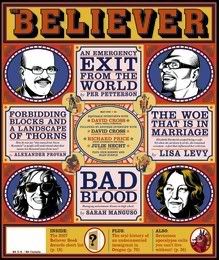
Dave Eggers, indie publishing guru, writer, and editor of Timothy McSweeney's Quarterly Concern, just became a few degrees cooler when including two new poems by SDSU's Ilya Kaminsky in the May edition of his monthly magazine, The Believer. Kaminsky's poems rest alongside interviews with
David Cross, Richard Price and Julie Hecht, columns by Nick Hornby and Amy Sedaris, an essay by Alexander Provan, stories by Sarah Manguso and Per Petterson, and poetry by Mary Ruefle and Dean Young.
Kaminsky garnered critical acclaim with the publication of his Dancing In Odessa (Tupelo Press, 2004) which won the Whiting Writer's Award, the American Academy of Arts and Letters' Metcalf Award, the Dorset Prize, the Ruth Lilly Fellowship given annually by Poetry magazine. Dancing In Odessa was also named 2004 Best Poetry Book of the Year by ForeWord Magazine.

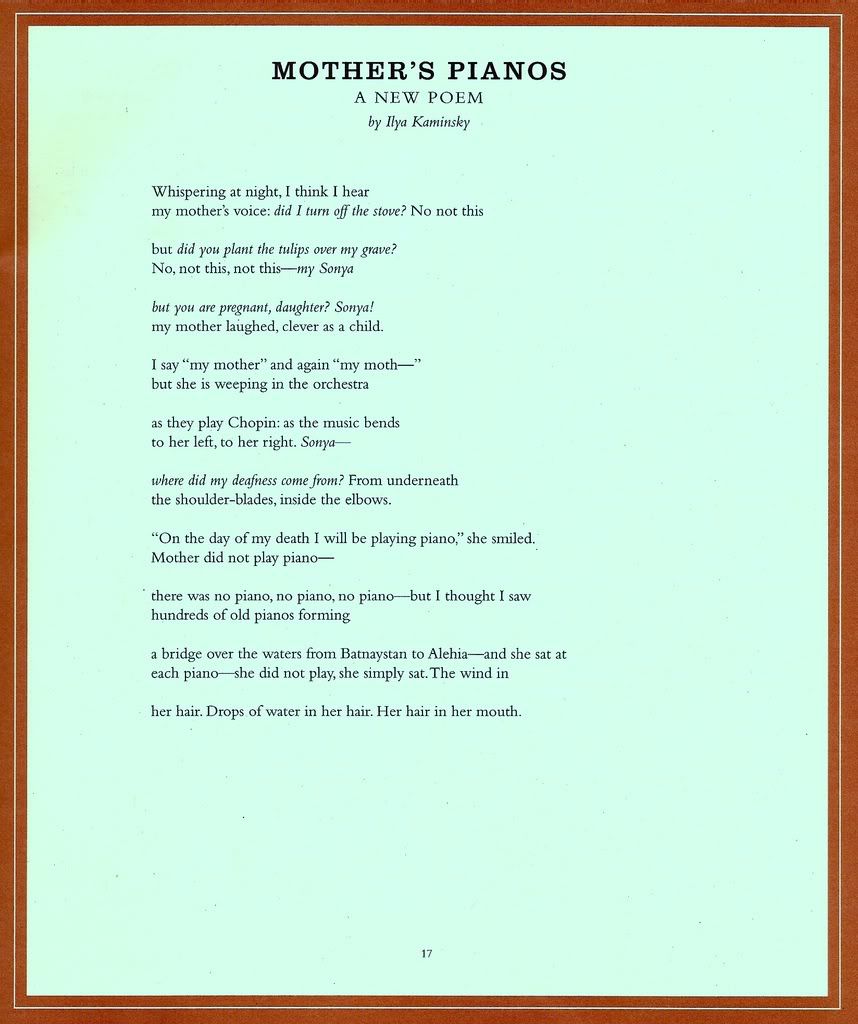
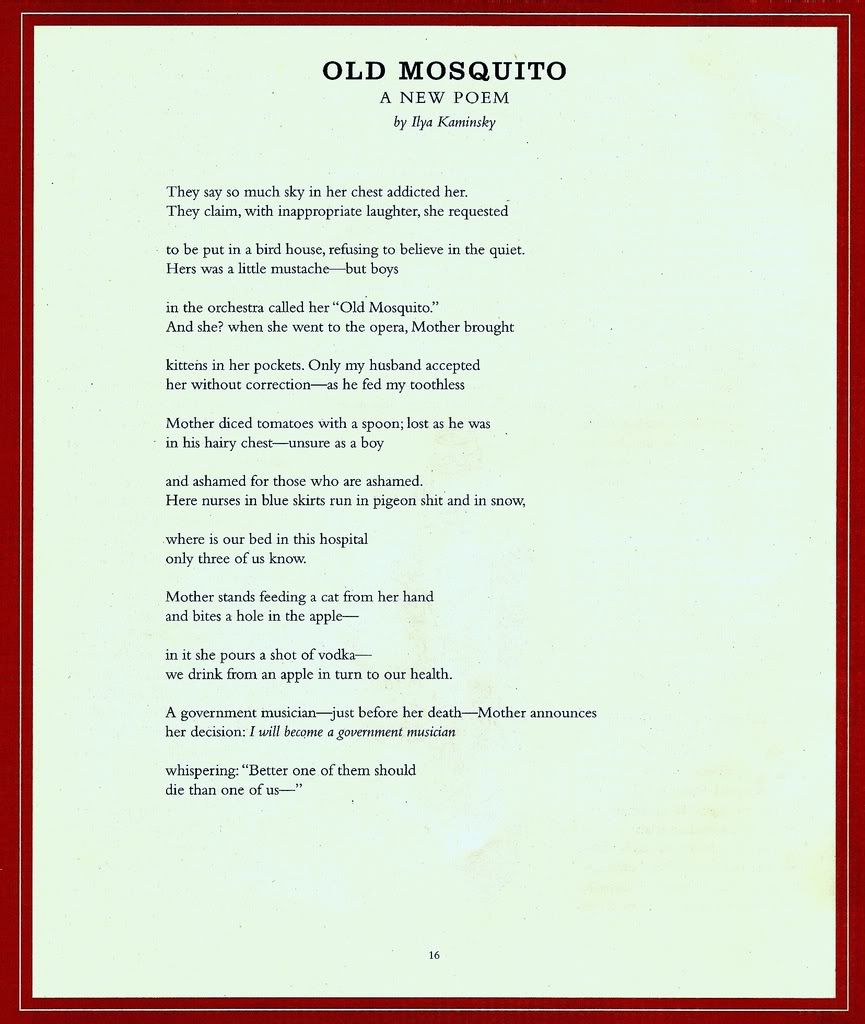
Read Kaminsky's two new poems, Old Mosquito and Mother's Piano's, both appearing below, but keep in mind that they read way better with the magazine in hand. The Believer may be bought online, or (as I prefer), at any number of local book stores such as Bluestocking Books in Hillcrest.

Kaminsky received a fellowship to join other top notch writers and artists this August at Vermont Studio Center.


Tuesday, June 10, 2008

Commencement '08 Program and Photos

Announcing the electronic version of the original COMMENCEMENT program for all those who lost theirs or forgot to attend. Simply click on program pages for larger view.


Joanne Meschery, MFA Presenter

Photobucket


Melissa Soltman, Outstanding BA Graduate

Photobucket


Outstanding Undergraduate, Melissa
Soltman, with Most Influential Professor,
Dr. Michael Borgstrom

Photobucket


Dr. William Nericcio, Professor and
Chair, English and Comparative Literature,
harangues family and friends, as Professor
Laurel Amtower peacefully daydreams

Photobucket

2008 Commencement Address | Oliver Mayer

Oliver Mayer
May 23, 2008
SDSU Arts and Letters

A transcript of USC Professor Oliver Mayer's Commencement address for BA, MA, and MFA recipients and their families and friends.

HYBRIDS 
It's exciting, and a little bit awe-inspiring, to stand here addressing you all on this very memorable and important day in your lives. I remember walking down an aisle very similar to this 20-some years ago when I graduated, wondering - WHAT HAPPENS NEXT? And here I am again - except this time I'm wondering what to say to you to commemorate a great achievement, to prime you for the real work ahead, and not to scare you too much. Because this is a great day. AND there's real work ahead for you - me - us.

This speech of mine should take only ten or so minutes. Only ten minutes more till you get that degree in your hand and the party can begin. So I understand my role.

Former governor Mario Cuomo once likened the role of Commencement Speaker to that of the dead body at an Irish wake. "They need you to have the party, but nobody expects you to do very much."

Still, I believe in taking a moment to explore what it means to be truly alive, in the immediate present, in the NOW. Having ascended the pinnacle of graduation, you have earned the right to look around you at the vista of where you've come from, and what lies before you. Even more importantly, you have earned the right to look inside yourselves and find out how you really feel about what you've achieved. How might your life lessons learnt here on campus translate to the life experience of the "real world" - wherever that might be?

So I ask you. How does it feel? What's really going on inside? What's the big question in your head? Your heart?

These are the questions that I like to call The Unanswerables - partly because they are so big you can never get your brain or heart entirely around them, partly because they change with every day of your life, and are entirely dependent on how you feel and what's happening to you. These are the questions that will have so much to do with your future. Ask yourself the unanswerable questions in order to find out what's really going on beneath the pat answers, the rehearsed responses, and what the media tells you to think.
So ask yourself:
What do you want?
What do you fear?
And what is your secret?

What better way to find out your next step than by identifying the things you really desire, are really afraid of, and really need to hide?

Asking questions is all about being in the NOW - and actively processing the things you observe to help you make the next step. The education you've received here at SDSU will help you immensely with that ongoing process. But not even a stellar education guarantees success. In order to get where you want to go, you will need to combine your resources, knowledge, your network of friends, your money, your faith and your energy in a way that creates an identity that works for you, that suits your place in the world and where you want to go. You will need to invent the best way to get there, for yourself. But how? That's why I say:

Be a hybrid.
Be good for the environment.
Be good for the economy.

A hybrid is the combination of two or more different things, aimed at achieving a particular objective or goal. We hear the word in relation to hybrid vehicles, but get used to the idea in other of forms and contexts, from Biology to language and word origins to the ongoing blending of cultures across the globe.

I am a hybrid. Not simply because I am of mixed blood origin - Mexican mom, Gypsy dad somewhere between Scottish and Jewish - An American mutt, as I like to call myself. Not simply because my wife and I drove here in our new Prius (40+ miles to the gallon, but who's boasting?). Not simply because I was born and continue to live in mixed-up Southern California - El Lay to be exact, where the Prius is Toyota's bestseller, by the way. Not simply because I am in the dramatic arts, the most mixed up of writing careers - combining elements of poetry, song, movement, and exhibitionism onstage. And not simply because my most recent collection of plays - THE HURT BUSINESS - is also the most recent book by my editor, publisher, writer and friend - your own Professor William Anthony Nericcio - making the book a hybrid or combination of our best work together and apart.

I am a hybrid because it best suits my American landscape to be so. It suits the way I want to see myself in relation to this thing called America. In order to live best now in this growingly difficult economic and geopolitical environment, I believe we need to mix our fuels and resources in all manner of new ways, and I don't just mean combining gas engines with electric motors. I want to combine what I've learned in academia with what I know from the street. I want to create something new and better and more responsible than what I've seen from decision makers and culture brokers in the last 10 years. I want to represent what's best about us, and I want passionately to lessen the worst aspects of who we are. That includes my carbon footprint, my stance on the War and on war in general, my community involvement and activism, and the way I wish to express my artistic self.

But this isn't about me; this is about you now. So I ask you. How might you combine your education with your personal makeup and your family history to create a way of being, of seeing, of doing that helps yourself do better and doesn't hurt the world you live in? How might you become a hybrid?

We are already hybrids because the tradition of hybridization - of crossbreeding, of combining different varieties of human experience - has everything to do with our history. This is a happy day, so I won't go into the details of the American Conquest. But suffice it to say that we as Americans are hybrids by definition and force. From the moment Cortez kissed La Malinche, Europeans and Native Americans have been combining DNA. When you add the slave element from Africa into the proceedings, then you begin to see the wildly variegated cross-pollination that has been taking place from Plymouth Rock to La Havana to El Lay since 1520. Okay, college grads - how long has this been going on? 488 years? Looking beyond blood - if that's possible - think about the cultural crossbreeding that's occurred and still occurs - hopefully now less by force and more based on attraction and -- dare I say -- love. How our diet has changed and affected our cuisine - and our physique. How language has interwoven itself into the hybridization. How architecture has reflected the mixture of our peoples coming together here. How our faiths have grown and combined into new ways of understanding a Higher Power. How Science and Technology have taken hybridization to another level. This is our history.

Precisely by intermixing ourselves and everything we do, our forebears created something new and called it America. And yet recently, the design hit the skids somewhere. Didn't it? Life hasn't necessarily been getting better. Not recently, anyway. The Unanswerables got bigger and scarier and maybe some of our decision makers stopped asking the right questions. I wish I could tell you otherwise, but this is the American landscape you've inherited.

So now what? What happens next? What happens next is you become an active player from the local to the global.
Now - finally - we are in a position where our votes count, where one of our presidential candidates quite literally is a hybrid himself - of mixed parentage, education and culture. I'm not asking you to vote one way or the other, but I am asking you to vote. Combine your knowledge and your gut feelings, your dreams and your hard experience, and take the next step into the future. You can't do much worse than we've done recently; you can do a lot, lot, better. And I know you will. But you have to create something new, find the right mixture, the proper combination that is true not only to our history of who we are, but the dream of who we still can be.

My best buddy Keith, who is African American from Hollywood, just had a baby with his Bulgarian girlfriend Tatiana. Now I'm not calling my godson Alexander a hybrid per se, but I will tell you that he came from love, that he's going to be bilingual. And that he's going to be really good looking. He's a blend, and he'll be good for the world in many, many ways.

I'm not telling you to go out there and find yourself an African American or Bulgarian boy or girl friend and have a kid, but I am saying that you can if you want. You have the power, the right, the responsibility, and the chance to be true now about who you really are, how you really feel: to combine what you've learned with what you see before you and do something tangible - and beautiful - to make the world better.

But how? What happens next? Good question. When I ask myself, this is what I do. Create art whenever possible; you can do it. Save gas. Walk more. Eat fresh and in moderation. Vote wisely and often. Love strongly and without fear. Read a lot - one of the most important things you can derive from the university experience is the ability to read the fine print! Be curious. Open your mind and your heart. And use them actively. Invent. Create. Combine.

And yes, buy a hybrid vehicle. It's really good for the environment, and the bank account!
Be a hybrid in as many ways as you feel good doing so.
You'll be good for the world.
And the world will be good to you.


Tuesday, June 3, 2008

1989 English & Comp Lit Catalogue: Part II

The cover of the 1989 catalogue features photos of eleven notable writers likely to have been favorites of the faculty at that time. Compare these to the eleven notable writers featured at the top of the current SDSU Department of English and Comparative Literature website.

1989

You may notice, among other things, how Zora Neale Hurston and the other women writers pictured have managed to outnumber the men, even as they have in recent
enrollment trends at SDSU, or how back when Hemingway stood his ground, J.K. Rowling, Zadie Smith, and Chris Ware hadn't even produced the works which would eventually grant them the prestige of making it on our department website.

2008

1989 English & Comp Lit Catalogue: Part II


After 18 years of collecting dust, the catalogue featuring faculty from 1989's SDSU English Department has resurfaced. While many of SDSU's current English undergraduates were still being weaned, a handful of their future professors were at work enticing graduate students with "points of view" about writing and literary study.

Current faculty members from the 1989 lineup include Sandra Alcosser, Clare Colquitt, Jerry Farber, Fred Moramarco, William Rogers, and Carey Wall.

Those familiar with these professors' current statements on teaching might find that not much has changed after all these years. Take, for instance, the statement by Farber, extracted from his essay "Learning How to Teach: A Progress Report." The grading system developed by Farber remains almost identical to the one outlined in this essay, but as the following statement from the same essay shows, there's always room for change over time:
If we approach teaching as a career-long process of constant renewal, we're going to have to work much harder at it, but, as students may learn when they take a fascinating and very demanding course, some things can be more work and yet less like work (139).
Of course, some of the former faculty have moved on. Shirley K. Rose moved to Purdue University in 1995 where she still specializes in Rhetoric and Composition. Donald Shojai is a recently retired Professor Emeritus. Lynn Luria-Sukenick passed away in 1995 at the age of 57.


Listen: Sandra Alcosser - Entomologists' Landscape


Monday, June 2, 2008

Joanna Brooks Tenure and Books

When pioneering literary figures Absalom Jones, Samson Occom, Richard Allen, and Prince Hall aren't discussing Joanna Brooks's recent tenure, they spend time hanging out in her award-winning book, American Lazarus (Oxford 2003), which shows how these men shaped the American experience of race and religion back in the eighteenth century--long before Brooks began her tenure track.  

You-Don't-Say Occum has also been known to say much more, as Brooks argues in her recent edition, The Collected Writings of Smason Occom, Mohegan (Oxford 2006)

Next up, according to Brooks, will be "a literary archeology of why English colonists left England for the Americas."